
On 8 October 2025, Jamie Dimon told the BBC he was "far more worried" than others about a serious market correction, and put the odds near 30%. A year on, SPY, the oldest S&P 500 ETF, is up 14% and trades at a lower multiple than it did that day.
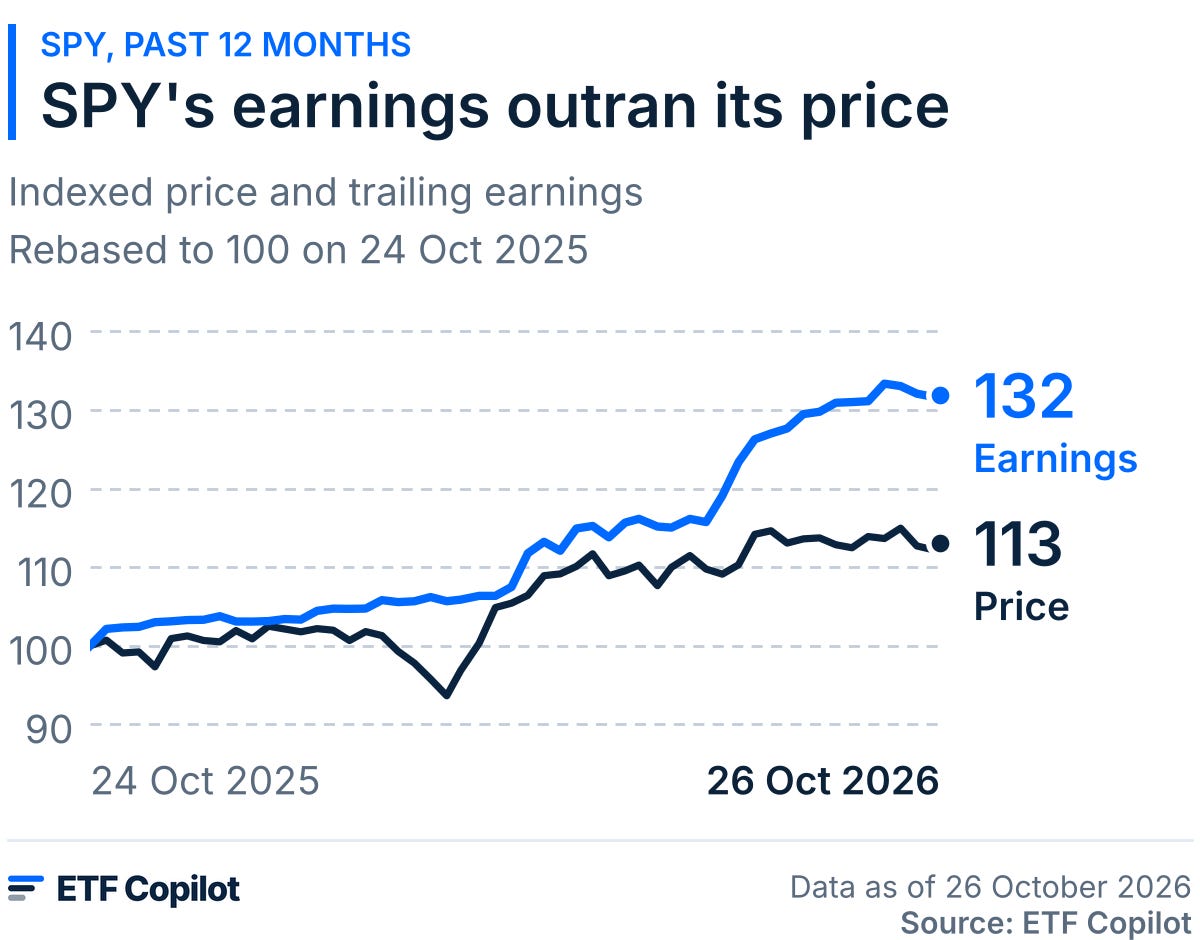
Part of the correction he predicted has already happened, in the less obvious way: SPY's P/E multiple fell while its price rose, driven by earnings that grew more than twice as fast as the price.
Price up, P/E down
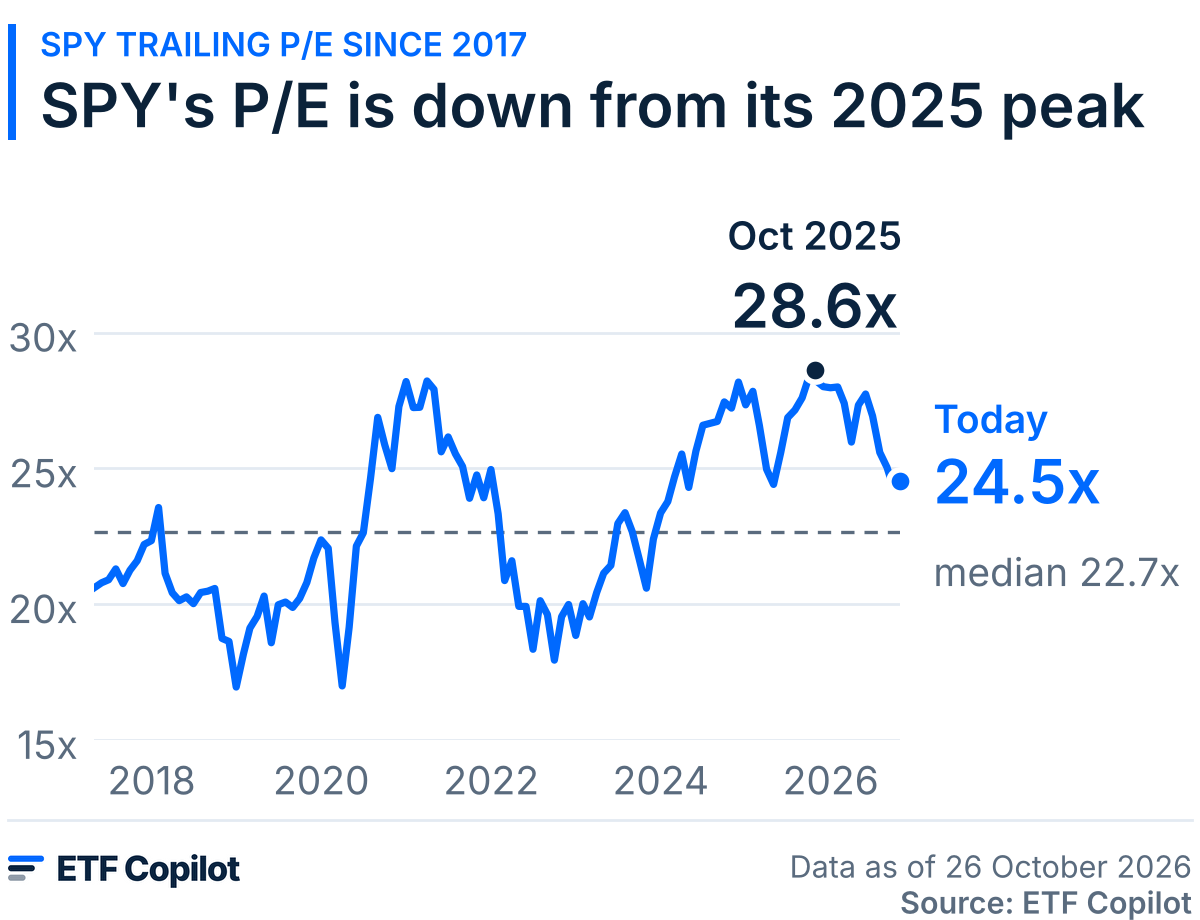
A year ago the market was expensive. SPY cost 28.6x the past year's earnings of its companies, and a few weeks earlier its P/E had hit its highest level in almost a decade.
Then earnings went on a run. Over the past year the price alone climbed 13%, while the earnings of SPY's companies climbed about a third. That gap did the correcting: the P/E slid to 24.5x.
That still leaves SPY above its median since 2017. It has come down from the top of its range to just above the middle.
Seven companies, half the growth
Split SPY in two and the picture sharpens. On one side are the Magnificent 7, or Mag 7: Apple, Microsoft, Nvidia, Alphabet, Amazon, Meta and Tesla. On the other, the remaining 493 companies.
Their share prices moved in step, both up between 12% and 13% over the year. Their earnings parted ways: the Mag 7's rose about two-thirds, the other 493's about a quarter.
That made seven companies the engine of the year. They delivered about half of SPY's earnings growth, and their P/E fell furthest, from 39x to 26x.
The index tilted toward tech
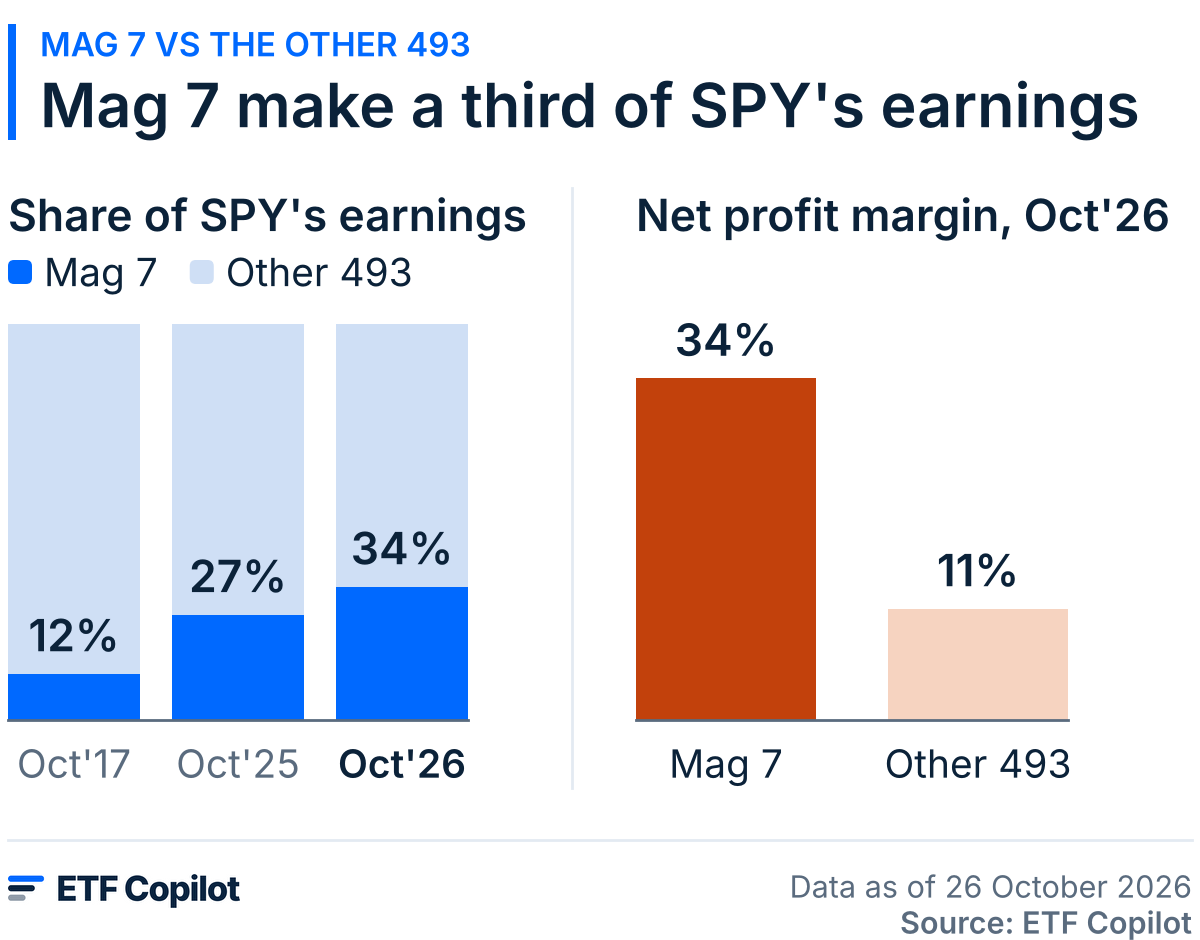
The tilt started long before this year. In October 2017 the Mag 7 produced about an eighth of SPY's earnings. Today they produce about a third, and their weight in the fund has followed the earnings up to about the same share.
They are also far better at turning sales into earnings. The Mag 7 keep about 34% of their sales as earnings, the other 493 about 11%. That mix is one reason SPY can sit above its 2017-era median: the index now holds a bigger slice of its most profitable businesses.
What comes next
Analysts expect the rest of the market to pick up the pace: their estimates have the other 493 growing earnings faster than the Mag 7 in the fourth quarter. SPY trades at 18.6x the earnings expected over the next twelve months, a multiple that assumes the run continues. Big Tech's third-quarter reports continue this week with Microsoft, Alphabet and Amazon.
The biggest tech story of the season is still ahead. Anthropic, the creator of Claude and one of the leaders of the AI market, filed on Monday for its long-awaited IPO, with a Nasdaq debut expected in mid-November. Investors have talked about a valuation of $1.5 trillion to $2 trillion, and the up to $100 billion it may raise would make it the largest IPO on record.
Anthropic will need time before it can join SPY: the S&P 500 asks for a year of trading and positive earnings over the past four quarters. Once it qualifies, it would be one of the largest additions in the index's history, and another step in SPY's tilt toward tech.
Dimon gave a correction 30% odds. The market took the other 70%, and still came out cheaper.
See the full breakdown on ETF Copilot: etf-copilot.com/go/substack/spy-up-and-cheaper
Written by the ETF Copilot research team. Data as of 26 October 2026. This is not investment advice or a recommendation to buy or sell any security. ETF Copilot receives no compensation from the issuers of the funds mentioned. Managers of ETF Copilot may or may not hold positions in the funds mentioned.
Sources: Jamie Dimon to the BBC, via Fortune, 9 October 2025; Anthropic Form S-1, 26 October 2026; Reuters on Anthropic's IPO, 26 October 2026; S&P Dow Jones Indices, megacap consultation results, 4 June 2026.